I recently read Ryan Reynolds’s statement about his deep remorse for holding his wedding at Boone Hall Plantation in South Carolina. The actor related that he saw a pretty venue on Pinterest but that, in reality, it was a place with a tragic past. He felt that he had really made a huge misstep that perpetuated division. I’ve read a few articles on the subject that seem to agree with him: that getting married on a plantation is a horrible thing to do. One author called it “promot[ing] a whitewashing of history atop crimes against humanity.”[1] The commentary on the subject shows that this is a really hot-button issue.
Continue reading “Of Ryan Reynolds and House Museums…”Civil War Naval Quarantines
History Behind the Story #3: Naval Quarantines
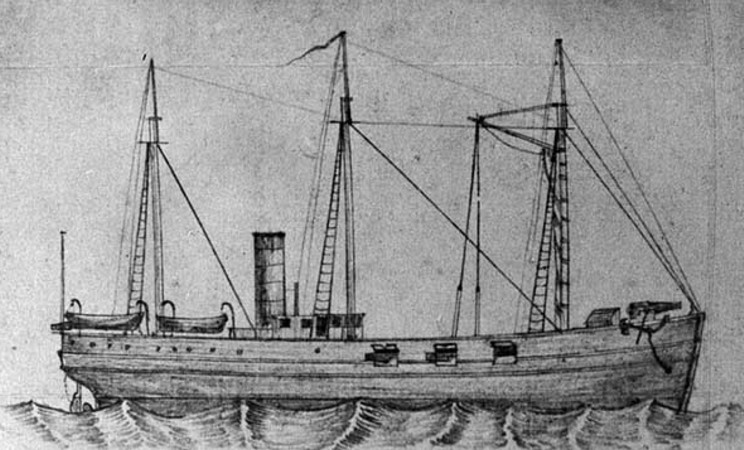
THE HISTORY: If you have read Northern Fire, you know that my historical male lead, John Thomas, makes the decision to quarantine his ship when Typhoid breaks out. When I first wrote Northern Fire, I never imagined a quarantine in modern times. Then when I did the first read-through edit, the quarantine scene felt eerily familiar to me. I realized that this is an instance in which history could be very useful to us. Our ancestors have experienced something that we never have. I encourage you to look at historical pandemics to see what it was like for those in the past.
Continue reading “Civil War Naval Quarantines”The Roper Hospital in Charleston
History Behind the Story #2: The Roper Hospital in Charleston
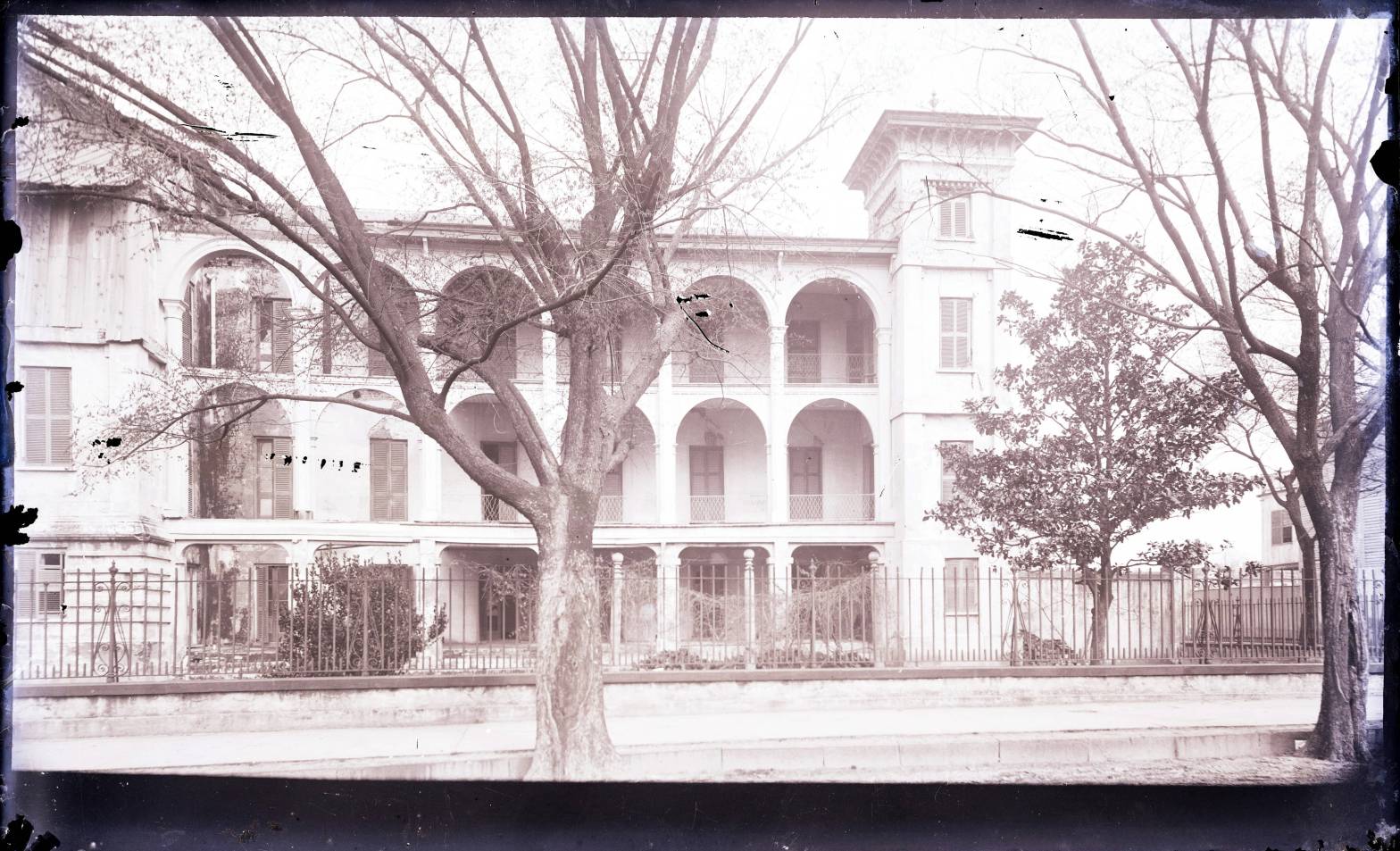
THE HISTORY: It all started with a bequest. Colonel Thomas Roper, a former mayor of Charleston, left the Medical Society of South Carolina $30,000, which, along with other donations and city funds, was ultimately used in 1852 to build the Roper Hospital. The building was located on the corner of Queen and Logan Streets. It proclaimed the following mission: “to treat all sick and injured people ‘without regard to complexion, religion, or nation.’”[1] I probably don’t have to tell you that this mission was pretty progressive for its time. The Roper Hospital was intended to be charitable from its foundation. In fact, it was specifically intended to benefit “paupers,” the word in that day for financially disadvantaged people.
Continue reading “The Roper Hospital in Charleston”The Charleston Fire of 1861
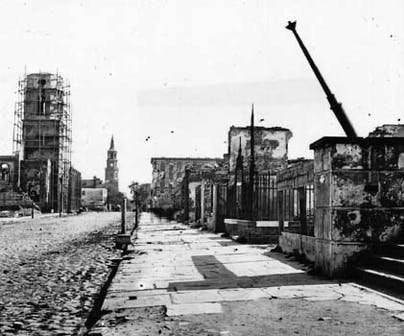
Welcome back to the History Behind the Story Series! This is a series of articles in which I give you the background on the events that happened in my books or the historical choices I made when writing the book. There were ten articles in total for Southern Rain, and the following is the first of the five articles that dig into the history of Northern Fire. There are some fun new features to the series, including different sections called “The History,” “Personal Spotlight,” “Food for Thought,” and “Analysis of Photograph.” Ready? Here we go!
Continue reading “The Charleston Fire of 1861”Naming Our Characters
Naming characters is one of my favorite things to do when I’m starting a new book. It can also be a really difficult process, though, and I have author friends who get stuck in this phase and throw their hands up in frustration. I’ve been working on honing my naming skills over the past eleven years and thought I’d share some of my techniques!
The most important thing is that the name works for you. It has to wash with the character in your head, or it just doesn’t click. A closely related tip is that the name has to work for the character. Sometimes the name makes the character, and sometimes the character makes the name. Usually, I try to choose names that really suit the person, kind of like you would do if you were naming a pet. An example of this is Shannon’s cousin, Marie, from the Torn Asunder Series. The name just always suited her, so that was easy. An example of the character making the name would be if you had a really bold girl but decided to give her a soft, feminine name, just for the contrast. I’ve seen this work really well.
Using an obviously unsuited name can also work if you want to try out an unusual moniker. I’ve had characters in the past that I’ve done this for, and I think, “Wow, you really pulled that off!” On the flip side, not every name is made for every character. For instance, my historical male lead, John Thomas, was originally Cameron. This is a bit of a modern name, but I knew I could get away with it because it is a surname, and a lot of people gave their sons family surnames back in the day. However, the name didn’t fit him. It was as though the name tried to make him something he wasn’t. His character even started to change a little from the way I had imagined it in my head. This is the power of naming.
You can also see by my experience with the John Thomas/Cameron debacle that naming can help you get to know your characters when their personalities are still fresh and undeveloped in your head. Through that process, I was able to learn that John Thomas was a little quieter and kinder than I had begun to draw him. The character begins to revolt against the wrong name, and it’s a really helpful tool to keep in your back pocket.
So how did I arrive at John Thomas? It’s hard to remember precisely after so many character names, but I’m pretty sure that John Thomas’s name was inspired by Stonewall Jackson’s. A lot of people don’t know that the famous General was actually Thomas Jonathan Jackson. I always thought the name had a rather nice ring to it. So I kind of flipped it and brushed it up for my character. Why the use of two names? People did this during the Civil War Era. Also, I could never think of one name that fully encapsulated his character.
A name is also a good opportunity to show that you’ve done your historical homework. You probably don’t want a Kayla in 1860. But it’s not always easy to think of good historical names or to know what names were common to your particular era. The best place to start is to pull up census records for the era you want to use. A lot of census records list ages, so you need to look for someone who would have been born in the same decade as your character. There is also a great website that compiles censuses by birth year and lists the most popular names of each decade. It can be found here:
https://www.galbithink.org/names/us200.htm.
I use that site all the time. Remember, if you’re writing a twenty-year-old character in 1850, you need to go back to 1830. Only think how much naming trends change in twenty years in the modern world! They didn’t change as much, historically speaking, but you can definitely see certain fashion trends as you scroll through censuses. Another tip is to study real people from your era and look at what their children, their sisters, their uncles, etc. were named.
My books also include enslaved characters. For their names, the process is a little different. The censuses also included and counted the enslaved since slave states got a boost in representation in Congress based off the number of slaves held. Obviously, then, you can find historically accurate names for the enslaved from censuses. But you have to find a census from a slave state, and I have often found that historical records from Southern states are a little spottier and more difficult to locate for various reasons. Another good option is to get onto the websites of house museums where there was once an enslaved population. Museums will often do highlights on particular enslaved people or families. The one tough thing about that is that house museums tend to focus on a particular era. For instance, Virginia plantations most all tend to spotlight the Revolutionary Era. So, another thing you can do is read biographies or diaries of slaveowners. Typically, the names of the enslaved will come up. If you have a really hard time tracking down slave records, you can just fall back on the names from the general census from the appropriate era. The names didn’t tend to be too different. For instance, Thomas Jefferson’s rolls list an enslaved woman named Patsy at Monticello, and his daughter was also Patsy.
Okay, so let’s wrap up the conversation on first names with some of my choices from the Torn Asunder Series. Shannon was originally Mary until it struck me that “Shannon” really suited her. Therefore, she became Mary Shannon and is called “Shannon.” Historically, a lot of people gave even their girls family surnames as middle names, so I thought I could get away with that. Frederick’s name just always suited him. “Adeline” (my modern female lead) fit her. It was kind of sweet, kind of quirky, kind of old. Adrian (my modern male lead) kept trying to be “Aidan,” which would have worked for him, but I kept forcing him to be “Adrian” for reasons I can’t now remember!
Now, let’s talk surnames.
I think the most important thing in surnames is remembering that you’re dealing with people who have a family history. I recently read a book that featured a historical character from Tennessee, and he had a last name that was distinctly of Germanic origin. My initial reaction was, “No, he’s not from Tennessee.” As I sat and wondered why that had thought popped in my head, it hit me that there just weren’t a lot of people of Germanic origins in Tennessee in the era the author had chosen. There were a few, though, and people can obviously move from their original state. I kept waiting for the book to explain the character’s family history, but it never did, and that was when it hit me. I googled the author’s state, and most of the people there are of Germanic origins. Bingo. It was just an oversight or an assumption, which could happen to any of us. There’s just so much to get right when you’re writing, and it’s impossible to cover it all.
The best thing to do is look at immigration patterns. For historical fiction, unless you’re doing it to make a certain point, it’s best not to stray too much from the area’s human ecology because you run the risk of straying from accuracy in naming. For instance, if you’re writing a book set in New Orleans, it’s best to use mostly French surnames, toss in a few Spanish, and add a dash of English. In Tennessee, immigration patterns show the bulk of the population was from England, Scotland, and Ireland. Always, there will be surnames that stray from the norm, and by all means, it’s great to show those. But do it with intention.
I would just like to make a note here that research should also be done if you have characters who were formerly or currently enslaved. You have a lot of options, including the following: having no surname while enslaved, having a family surname even while enslaved (if permitted), keeping an original African name, taking on an African surname after freedom, taking on a name that meant something special to the individual like “Freeman” or “Ransom,” and taking on the former owner’s surname. You can see the potential for so many wonderful stories and choices. To explore those stories through naming is a particularly profound opportunity.
Also, if your historical story includes a Native American character, similarly there needs to be some research on various naming methods. Sometimes Native Americans would choose to take on a European name either because they were fathered by a European American or as a measure of assimilation. Sometimes Native Americans would choose to keep traditional names.
Obviously, for modern storylines, some of this goes out the window because we live in a much more mobile and diverse society. But I still think it can’t hurt to do a little research. Even your modern characters have a family story, and I think their backgrounds ring truest when you take a little time to research what that story might have been.
As for my surname choices? Charleston has a strong French Huguenot history, and Ravenel is a French Huguenot name I heard again and again on a nerdy historian’s tour of Charleston. So I plucked it right from history. My historical male lead is from New England. Obviously, there were a lot of people of English descent in Massachusetts in the nineteenth century, so I pulled a list of English surnames. “Haley” appealed to me because of Alex Haley’s powerful connection with the history of slavery in light of John Thomas’s abolitionist roots. So names can also be symbolic or literary while still being historically accurate! My modern male lead is also a Ravenel due to his family connection back to the historical portion of the series. My modern female lead is a Miller. A girl-next-door name, no?
How do you choose your character names? Any good tips? If you’re not a writer, how did you name your kids or pets?
Release Day: Northern Fire!
Happy Release Day to Northern Fire! This is Book 2 of the Torn Asunder Series. The new release’s journey will take us all the way through the Civil War for the historical portion and through the next few months of our protagonists’ lives in the modern portion. Order Northern Fire now exclusively from Amazon.com!
Click the link below to order, or scroll on down for the synopsis!

New History Behind the Story Series Announced!
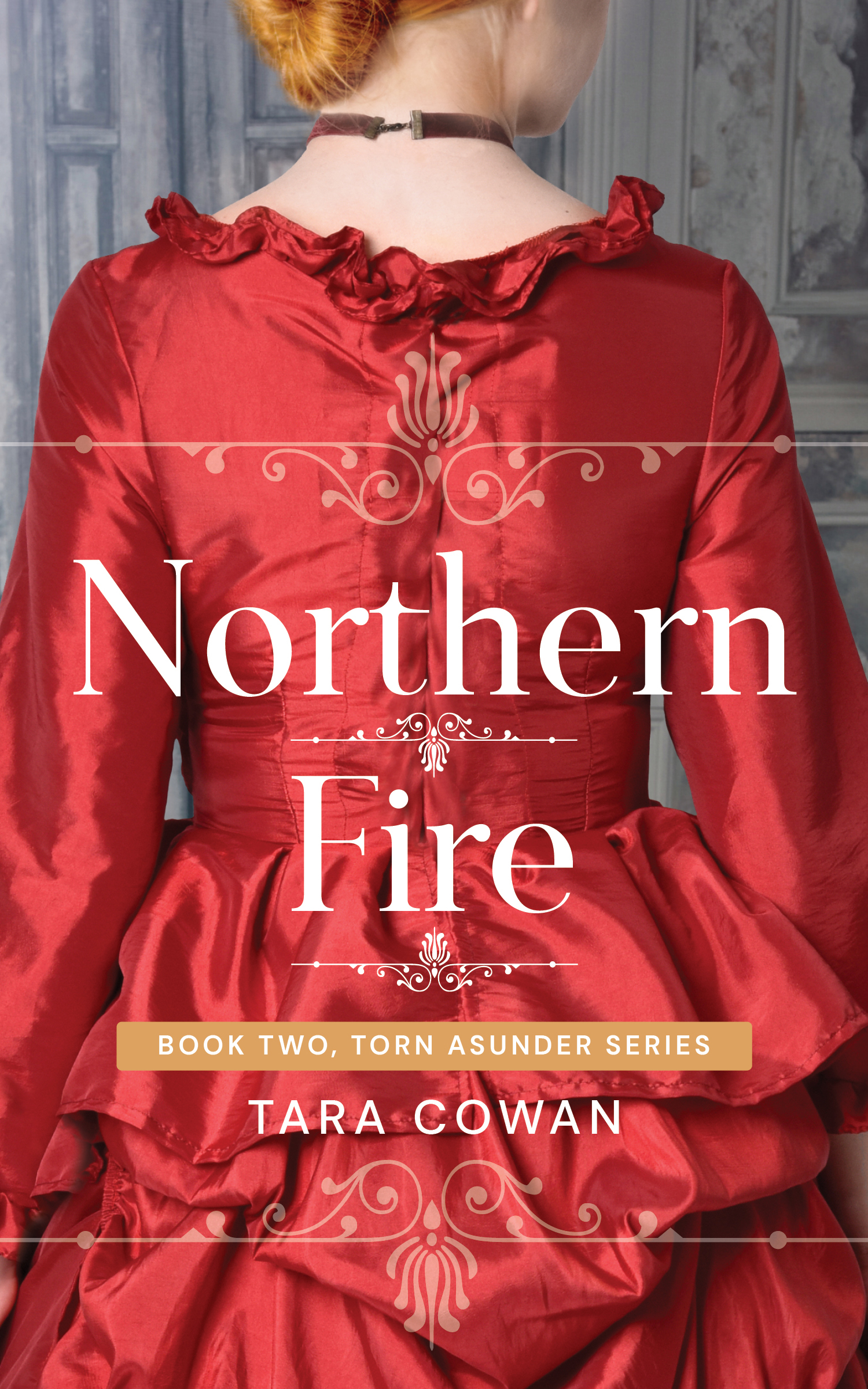
To celebrate the release of Northern Fire (Book 2 of the Torn Asunder Series) I am launching a new series on the history behind the story for Northern Fire. For Southern Rain, I ran a similar series that was really fun. Readers got to learn all about the history upon which I built my storylines. The topics I chose this time will give you the first glimpse into some of the events and subjects covered in Northern Fire! If, after reading the book, you have any questions for me about the events in the book or the historical choices I made, let me know, and I am always happy to add an article!
Here are the planned articles:
- The Charleston Fire of 1861
- The Roper Hospital in Charleston
- Naval Quarantines
- Violence Against Women in the Civil War
- The Fall of Charleston
Character Pictures
I ran a poll on my Instagram story as to whether readers like to see the pictures or portraits which inspired characters or whether they instead like to imagine characters for themselves. As of writing this post, the post is at 70% for seeing the pictures and 30% for imagining.
I have had experiences in which it was super fun to see the author’s inspirations. I’ve also had experiences in which the author’s imagination and mine were so different that I was a little thrown off! So my Instagram friend Tammi suggested that I post the pictures I used for my characters on my blog so that people who don’t want to see them don’t have to. I thought that was a great idea.
So just be forewarned… Pictures will follow for my character inspirations. You can quit reading now if you want to, and I won’t be offended. 😉
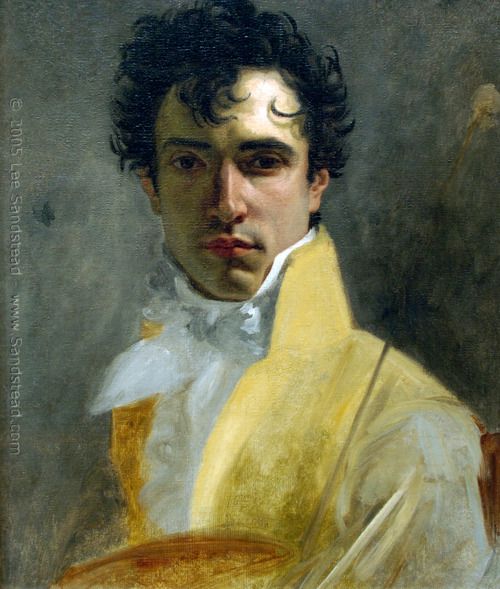
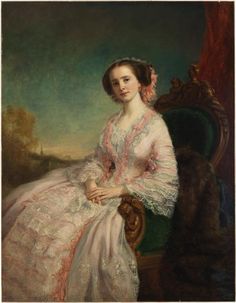
One more a caveat: It’s been so long since I first saved these pictures that I have no idea where they came from or who the people are. One was pulled from an ad for a legal research site. LOL! So I credit the pictures to their owners, whoever they may be!
Okay, without further ado, here are my inspirations…
Shannon:

John Thomas:

Frederick Ravenel:
Marie Ravenel:
Where are the modern people, you might ask? I actually left Adrian entirely to my imagination and didn’t base his appearance off of a picture. Adeline was kind of the same way. I also left most all of the side characters to my imagination, too.
Occasionally, though, I will see someone, either on TV or in real life who reminds me of a character, and that’s always fun. There was a contestant from Season 2 of the Great American Baking Show of whom I remember thinking, “Oh, hey, she looks a lot like Adeline!” Her name was Amanda Faber. I remember that she was a great baker! LOL!
If you are a writer, do you ever meet your characters in real life, either in appearance or personality? If you are a reader, have you ever imagined someone totally differently from the author? Do any of the pictures above represent my characters as you imagined? I’d love to hear from you!
Q & A: Northern Fire
Hello again, friends! My sister, Hannah, and I sat down for a Q&A about Northern Fire, and I have also included some questions from some wonderful readers. Some are about the book, some are about writing in general, and some are about me! (Just a word of caution, if you haven’t yet read Southern Rain, there might be a few spoilers for that one! However, there shouldn’t be any spoilers for Northern Fire, and I encourage you to read the Q&A before you read it.) Here we go!
Hannah: What was the inspiration for Northern Fire? Was it hard to narrow down your ideas?
Tara: It’s all very hazy now, but I think the inspiration for the Torn Asunder Series came to me while I was taking a walk during my two-month intense isolation/study time for the Bar Exam. I had this idea for this historical heroine who leaves her husband, an absolutely shocking thing for the Civil War Era, and I really wanted to know how that would play out. Hmm, could I pair it with this modern storyline about a preservationist that had been floating in my head? Yes, I could! It’s not usually hard to narrow down your ideas because something always comes to you passionately and has to get out.
Hannah: What kind of audience do you expect to read Northern Fire?
Tara: The tendency is to say women who love Historical Fiction/Romance, but several men have read and liked Southern Rain, too. I think, between the history, the modern romance, and the Women’s Fiction dimension, there is something for everybody. I will refer you to the Q&A for Southern Rain for information about young readers/parents’ discretion, which can be found in its own special tab on my blog at http://www.teaandrebellion.com. As always, you can contact me if you have any questions.
Hannah: What should the reader know going into Northern Fire?
Tara: I think I always underestimated the series, in that, whether modern or historical, I thought it was going to be lighter than it was. There are some heavy topics, which may be difficult for some people. There are a couple of sad scenes and some overarching struggles that may be relatable for a lot of people, in both good and tough ways. I think the advantage of having a book that tends towards heaviness is that, wherever there is pain, there is also a lot of depth.
Hannah: How do you deal with difficult subjects? How do you strike the balance of far enough/too far?
Tara: It’s sometimes hard to know how much is too far. I have learned that a good rule of thumb for me is that if something makes me uncomfortable, I should probably take it a step further even from there and push the boundaries a little bit to experience the truth of the story. When a book does tend towards heaviness, the great balancer is always hope. Human life is so difficult, but there is such beauty in it, too. It’s important not to overlook either.
So many readers: Why don’t you just give Shannon and John Thomas a baby already?!
Tara: So sorry! This is probably the number one question I have gotten. It’s touching that everyone is so worried about their happiness. When I first started reading clean historical romance about twelve years ago, I found some truly talented authors, and many of those books have beloved spots on my shelves. But I noticed a recurring structure: boy meets girl, usual struggles ensue, they get together, happy ending equals healthy baby. That didn’t quite ring true to me. Historically speaking, a lot of couples struggled in conceiving (George and Martha Washington, James and Dolley Madison, Andrew and Rachel Jackson) or in carrying to term (Louisa Catherine Adams, Mary Church Terrell). Sometimes the mother died from something as simple as severe morning sickness during the pregnancy (Charlotte Brontë). If you could have a baby, the birth was an extreme ordeal for which you could thank God if both mother and child survived (Stonewall Jackson’s first wife died from a hemorrhage just after giving birth, and their child was stillborn). Lots of men had two families because the first wife died in “childbed” (Theodore Roosevelt). Many women made it through the birth only to linger and die from puerperal fever or physical complications (Thomas Jefferson’s wife) days, weeks, or months later. Of course, for those who did not have as many difficulties, families were often large due to lack of effective birth control methods, and I think that is perhaps where the idea that “everyone in history had eight kids” comes from. But even for those large families, it is difficult to think of a historical figure who did not lose a child to a childhood illness. All of that is a long way of saying that I’m not sure the notion, historically speaking, of a happy ending culminating in a modern-type birth where there are no worries quite passes muster. I kind of wanted to represent the full range of historical experiences in this story. Shannon struggles, while Marie has a whiplash-inducing honeymoon baby. And, while I won’t tell you here whether Shannon and John Thomas have a baby, or even whether they reunite (this is all just a matter of plot), I will tell you that their ultimate peace, if they find it, will be in acceptance of whatever situation in which God places them, of themselves just as they are, and of God just as He is, which is what I think we all must find before we can get down to the more trivial business of daily happiness.
Hannah: What do you think it takes to make a strong male character likeable, but also real? Do you think John Thomas and/or Adrian apply?
Tara: My sister and I (ahem) talk about this a lot. For me, a main male character (“MMC”) has to be loyal, and his love cannot waver. He also has to be gentle with the female character, physically speaking—there can be no love where there is any sort of fear. I don’t mind a good argument, but I don’t like a lot of yelling or any verbal abuse. I also like the MMC to be capable and to have a good grasp on his situation. I like to write male characters that you know are good ones, deep down. I don’t think that’s an unrealistic expectation at all (and if it is, we’re better off alone, girls!). Other than that, I think the sky is the limit! I love writing all different sorts of male characters. It’s totally okay for them to have their own struggles. They don’t have to be superheroes. Do John Thomas and Adrian apply to my criteria? Funnily enough, I’ve had several people tell me they don’t trust Adrian yet. So I hope this isn’t a spoiler when I say that: yes, they meet all of my main criteria. I will say that they both surprised me with the depth of their emotion by the end of the series, which I loved.
Hannah: Do you relate to Shannon or Adeline personally?
Tara: I always say that there is a little bit of me in all of my characters. I relate to Adeline’s love for history, desire to keep the peace, and awkwardness. I don’t relate to her laid-back personality, or her ability to not overthink things, unfortunately. I think every human being can relate to Shannon, since she kind of represents the human condition, that knot of tension that grows in all of us from childhood on, through numerous and varying causes. She also represents the choice we have of letting those dark forces overtake us or of overcoming them through the only way I know how—clinging to God.
Hannah: You put a lot of work into side characters. Do you ever wish the main plot had followed them instead of your MMC and MFC?
Tara: I know you’re asking this because you love Frederick and Marie. Sometimes, I wish I had made Frederick’s story on equal par with Shannon’s. However, sometimes, there is something enticing about a side-character only when the person is a side character, so I think it worked out fine.
Tammi: What other interests do you have, in addition to history and crafting stories?
Tara: That’s a great question! My day job is a lawyer, and I’m fortunate enough to work with my brother. I do a lot of property law, but my favorite thing to do is estate planning. I read a lot of historical fiction. I watch pretty much any historical drama that comes on Netflix, Amazon Prime, or Hulu. I really enjoy Audible for books that I would love to read but don’t really have time to dig into, like historical biographies and religious/theological books. I have been studying Contemplative Prayer and have found a lot of meaning in learning to listen for God’s voice in new (to me) ways. I love antiquing, particularly buying old furniture. Of course, I absolutely love touring historic homes. I just bought an old house, so there is always something to keep me busy. The History Chicks Podcast and Ben Franklin’s World Podcast have become something I love to have on in the background while I’m cleaning or working in the house. I like to listen to music and have several playlists on Spotify. I played piano in another life and would like to get back to that soon. I like Royal Watching and follow the “From Berkshire to Buckingham” Instagram page and blog for fun analysis. I love going to plays and am fortunate to have three excellent amateur theaters nearby. I’ve recently gotten back into shopping/fashion in an effort to step up my wardrobe. And I have been dieting for about four years now and in the course of that have picked up a lot of healthy eating habits, so I’m always looking for great vegetarian or organic options.
Josette: What is your favorite historical book?
Tara: I always have trouble narrowing this down because I love so many. For historical fiction, I’ll have to give you four, loosely in order of my preference: A Bride Most Begrudging, by Deeanne Gist, Bath Tangle by Georgette Heyer, The Silent Governess, by Julie Klassen, and America’s First Daughter, by Laura Kamoie and Stephanie Dray. For books that were written in historical times, I would have to say: Persuasion, by Jane Austen, The Tenant of Wildfell Hall, by Anne Brontë, and The Blue Castle, by L.M. Montgomery.
But if I had to pick an absolute favorite, that would probably be A Bride Most Begrudging. I’ve read it so many times, expecting it to disappoint as I get older, but it never does.
Tammi: Do you listen to music while you write?
Tara: I make a playlist on Spotify for every book or series. Sometimes I listen, and sometimes I prefer silence. I always play a song which I’ve chosen as a kind of theme for the book when I write the last scene and just push replay over and over until the scene is finished. I really like music with choir or strings and piano. I love The Piano Guys, Scala & Kolacny Brothers, Paul Cardall, Helen Jane Long, and 2Cellos. I had never heard of a lot of them until I started listening to the Scala & Kolacny Brothers Pandora Station (after hearing their music for the Downton Abbey trailers), and now they’re some of my favorites!
Tammi: How much time do you spend writing each day?
Tara: I used to spend about an hour or two writing every day, even while I was in law school. Now, sometimes I’m not able to do that because of eye strain from said law school. So I usually end up writing on the weekends. I like to write in bulk and might write for eight hours one day and none for the next four days. If I’m really feeling inspired and am able, I usually write for about two hours per day.
Tammi: Where do you write?
Tara: In my living room. I like a room with lots of windows and light. I have a desk that I wrote three novels on in college and still sit there sometimes, but I often write on my couch now.
Tammi: How did you become interested in writing historical fiction?
Tara: My mom would bring me home Christian Historical Fiction books that she had bought on the sale shelf at our local Hastings bookstore. I absolutely devoured them (Deeanne Gist, Julie Klassen, Lynn Austin…) One day, I said, “I just love these!” And my mom said, “Why don’t you write one?”
Tammi: When did you start writing?
Tara: When I was seventeen, pretty much right after that conversation with my mom. 🙂 That’s been about eleven years now. My first manuscript was written in a composition notebook and was set in Nineteenth Century England. It was terrible. 🙂
Tammi: When did you develop your love for history?
Tara: My mom was a 5th and 6th grade Social Studies teacher during my childhood, and my dad likes history, too, so my siblings and I grew up in a very history-friendly household. My mom would tell us fascinating historical tidbits. My parents knew how to make history fun, taking us to Washington, D.C. and Charleston when we were little, with the emphasis always on history. I remember one Sunday, they took us (after wrangling us all to church and back, no less!) with the grandparents to Belle Meade Plantation in Nashville. I remember when we walked through the door and the docent directed our attention to the ruby glass above the door. “Pretty,” she said, “but there to serve no other purpose than displaying the Harding family’s wealth.” Me: Oooh. My brother and I found that fascinating. Then came the time for the trip down to the mausoleum. (I should note that in Middle Tennessee, mourning customs were heavily followed and are always a huge part of most any tour.) I was petrified. I was not going down there. Luckily, my grandpa felt the same. Skirting the cooling pad (yes, where they laid out the bodies—it was just lying in the hall, for crying out loud!), he found a bench and said, “Sissy, I think I’m going to sit right here.” My response: “Me, too, Pa!” That trip is one of my fondest childhood memories.
Matthew M.: How did you get interested in the American Civil War?
Tara: I actually started out with an aversion to the Civil War. I always liked history, but I remember looking at pictures of the battles in my 5th grade textbook and feeling horrified. I kind of stayed away from the Civil War until I needed to fulfill my history credits at Tennessee Tech, and one of Tech’s history professors was teaching his nearly-famous course on the Civil War and Reconstruction. He really brought the Civil War alive for us. It was an intensive course, with multiple books, articles, papers, etc., and we were required to learn battle movements and plans for all of the major battles and recite them in narratives on our tests. We covered all aspects—the home front, the lives of the enslaved, theories that developed in the post-war era… After that, I wrote a series which follows several siblings in Civil War Era Virginia. I think setting a family drama in that era and researching minute details for so long is what finally tipped me over the edge for the Civil War. The opportunities for drama are boundless, the range of human emotions breath-taking. We see the best and worst of humanity, and, as an author, that’s exciting to explore. I realized that if I could get a little braver in dealing with a very tough time period, there was a wellspring of experiences to be discovered and retold!
Matthew M.: Do you use any primary source material for your novels?
Tara: Yes, I absolutely love getting my hands on a letter which gives special insight to the time period. You can find some great letters in online archives, and I have a book called War Letters: Extraordinary Correspondence from American Wars by Andrew Carroll, which has been great. I also find that docents are excellent to read you parts of letters when you tour historic homes. And touring historic homes is something I love to do to get a feel for the time period, and, if it’s close enough to my setting, the place. Seeing an antique from the time period can really ground you in the era, too. I also read diaries and recipes from the era, and I look at a lot of photos or portraits for the fashion.
Reaching out beyond that, I also look at scholarly works or biographies. For the Torn Asunder Series, some of the books I read in preparation were:
At the Precipice, by Shearer Davis Bowman
The Civil War at Sea, by Craig L. Symonds
An Antebellum Plantation Household, by Anne Sinkler Whaley LeClercq
Grant, by Ron Chernow
Hannah: Not all authors enjoy the subjects of their own books. Would you devour this one?
Tara: I would read it, yes, and I think I would enjoy it. I have written other books that are more to my taste. I think this one is geared more towards my sister’s taste (wink). But there is, I hope, always an element that I strive to put in my books that makes you want to keep reading or read the next one. Can I tell you a secret? There’s another cliffhanger in Northern Fire! Gotta run now before readers attack me!
Stop by the Southern Rain FAQ Page for some more questions answered about the series and my writing in general. As always, if you have any questions, feel free to contact me!
Cover Reveal: Northern Fire
I’m so excited to share the cover for Northern Fire! This is Book 2 of the Torn Asunder Series and follows Southern Rain. The Kindle edition is available for pre-order now and will release to your device on May 25th. The paperback will be available to order exclusively from Amazon.com on May 25th.
Here is the cover! What do you think?
{Charleston, Modern Day:
Adeline Miller’s life has taken a significant detour. Nothing has been quite as she imagined since coming to Charleston, and the worst of it is the uncertainty that leaves her wanting both to take a leap of faith and to protect her heart. Still, she is determined to restore the Ravenel-Thompson House and discover what secrets and mysteries lie beneath its hallowed walls.
Charleston, 1861:
Shannon Haley’s choice is made. Plunging into a war-torn land, she will risk everything to reach her family. Reconciliation is only a vague and distant hope, but what awaits her when she arrives in the South, she can only guess. Crushed by loss and despair, can she find a new life among the ruins of her home, her marriage, and her peace?}
This book has been a long time in the making, and I cannot wait to share it with you!
-Tara
Cover Design By: TeaBerryCreative.com
 Tara Cowan